
https://www.aconfront.com/the-ultimate-guide-to-home-lighting-efficiency-and-cost-savings/
How long do you think about your light bulb? Perhaps it’s just when they break down and need to be replaced? But in fact, choosing the right light bulb can not only affect the lighting layout of your home, but also have an impact on your electricity bill. That’s why the usage rate of LED lamps is increasing, precisely because they are durable, easy to use, and cheap.
So, how do LED lighting fixtures help you save money? How much electricity can they save? Let’s take a look together!
LED lights are more energy-efficient than traditional light bulbs
LED stands for Light Emitting Diode, and its working principle is completely different from traditional incandescent bulbs. Incandescent light bulbs rely on heating the filament to emit light, while LED lights directly produce light through the flow of electrons. Therefore, LED bulbs generate almost no heat and convert most of their energy into visible light, making their energy efficiency as high as 80% -90%!
In other words, using the same amount of electricity, LED lights can provide more brightness, longer lifespan, and reduce energy waste, thereby lowering your electricity costs.
How much money can LED lights help you save?
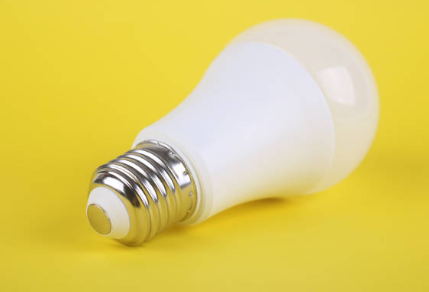
According to research data, if an average American household switches from incandescent bulbs to LED bulbs, they can save $175 to $250 in electricity bills annually. Under optimal conditions, LED lights can even help you save up to $300 in energy costs.
You can use the following calculation method to estimate the specific savings amount of your home:
Calculate daily electricity consumption:
Count the number of light bulbs in your home and calculate the daily usage time (in hours) of each bulb.
Multiply this number by 365 to obtain the total usage time for the whole year.
Calculate power consumption:
Record the wattage (W) of each light bulb, divide by 1000, and convert to kilowatt hours (kWh).
Multiply this number by the total usage time calculated in the first step to obtain the total electricity consumption of the light bulb for the whole year.
Calculate electricity expenses:
Multiply the local electricity price ($/kWh) by the total electricity consumption obtained in the previous step to calculate your current lighting electricity bill.
You can calculate the total electricity cost for incandescent and LED lights separately, compare the difference between the two, and you will know how much money you can save!
For example, assuming an ordinary household uses 20 60W incandescent lamps, turns them on for 5 hours a day, and the electricity price per kilowatt hour is $0.12, then:
The annual power consumption of incandescent lamps=(60W ÷ 1000) × 5 hours × 365 days × 20 bulbs=2190 kWh
The annual power consumption of LED lights (assuming a power of 10W)=(10W ÷ 1000) × 5 hours × 365 days × 20 bulbs=365 kWh
Electricity cost comparison: incandescent bulb electricity cost=$262.8, LED electricity cost=$43.8
Save amount=$262.8- $43.8=$219
Did you see? Switching to LED lights can save $219 in a year!
Why are LED lighting fixtures so energy-efficient?
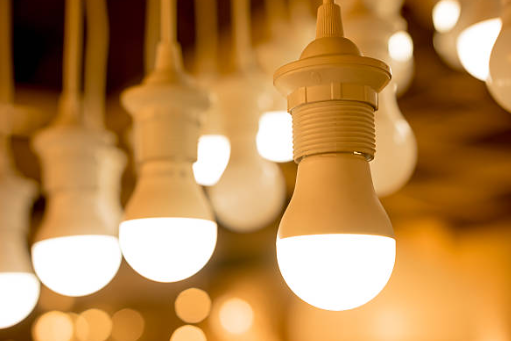
In addition to basic energy-saving features, LED lamps also have the following energy-saving advantages:
directional lighting
The light from LED lights is directional and can directly illuminate the desired area, rather than spreading evenly around like incandescent bulbs. This means that LED lights can illuminate your room more efficiently without wasting light energy.
Low temperature operation
More than 80% of the electrical energy in incandescent bulbs is converted into heat, while LED bulbs do not generate much heat, and almost all of the electrical energy is used to emit light. This not only makes LED lights more energy-efficient, but also reduces the additional air conditioning energy consumption caused by bulb heating.
long life
The lifespan of ordinary incandescent lamps is about 1000 hours, while the lifespan of LED lamps can usually reach 25000-50000 hours, or even longer. This means that you may need to replace the incandescent bulb 25 times before you can wear out one LED bulb, greatly saving the cost of replacing the bulb!
Is LED light bulb worth buying?
Many people may worry that the initial cost of LED bulbs is higher than incandescent bulbs, but in the long run, the electricity savings and longer lifespan brought by LED bulbs can fully compensate for the initial investment.
Assuming you buy an LED bulb for $10, its lifespan can reach 25000 hours, while a $1 incandescent bulb can only last for 1000 hours. So, in 25000 hours, you need to purchase 25 incandescent bulbs (for a total of $25), while LED bulbs only cost 1 bulb (for $10). Combined with the saved electricity costs, LED lights are definitely a cost-effective investment!
Conclusion: LED lights can help you save more money!
If you are still using incandescent bulbs, you may consider replacing them with LEDs. LED lights not only make your home more environmentally friendly, but also significantly reduce electricity bills, saving you money every year.
Although the initial price of LED lights is slightly higher than incandescent bulbs, in the long run, they are more cost-effective than incandescent bulbs. If you realize this, take action quickly.
https://www.aconfront.com/the-ultimate-guide-to-home-lighting-efficiency-and-cost-savings/