
https://www.aconfront.com/ultimate-guide-to-smart-lighting-control-switches-dimmers-sensors-and-voice-app-integration/
smart lighting lies not only in the light itself, but also in its control system . A good control system is the “soul” of the whole house smart lighting system, which determines the efficiency and experience of your interaction with light.
The current control methods on the market primarily focus on two core areas: convenient voice control and powerful app control . For users, choosing the smart lighting control system that best suits them means balancing immediacy, depth of functionality, and ecosystem compatibility .
This article will delve into the pros and cons of these two control methods, their applicable scenarios, and guide you on how to seamlessly integrate them with your smart home ecosystem, ultimately helping you find the smart lighting solution that best suits your lifestyle.
Voice control system: pursuit of “immediacy” and “invisibility” experience
Voice control is the most disruptive way of interaction in smart lighting .
A. Advantages and core value of voice control
Immediacy and hands-free:
Core advantage: Users do not need to look for their phones or touch switches; they can turn lights on and off, adjust brightness and color temperature, and more with just a single sentence.
Applicable scenarios: Especially suitable for situations where both hands are occupied (such as when cooking or holding a child) or in completely dark environments, it embodies maximum convenience .
After installing smart lighting throughout my home, the most common use case is bedtime control. Before, I had to struggle under the covers to find the bedside switch or use a mobile app. But now, I simply say “Goodnight mode” to my smart speaker. Not only does it turn off all the lights in the bedroom, it also automatically dims the hallway night light to 10%. This hands-free, one-step, instant experience is unmatched by traditional switches.
Natural scene linkage:
Advanced applications: Voice commands can trigger complex smart lighting scenarios, for example: “Alexa, turn on movie mode” – the lights automatically dim, the color temperature is adjusted to warm yellow, and the ambient light is turned on.
Invisible control aesthetics:
Design concept: Voice control hides the hardware behind the scenes, perfectly matching the minimalist and “invisible control” aesthetics of whole-house smart lighting .
B. Limitations and Selection Considerations of Voice Control
Dependence on the environment: The accuracy of speech recognition depends on the ambient noise level and the quality of the microphone.
Precision of commands: When fine-tuning a light in a specific area is required, voice commands can easily become lengthy or imprecise.
Best choice for users who value seamless experience and instant control and who already have or plan to deploy smart speakers (such as Nest Hub and Echo) in their homes.
II. App Control Systems: Pursuing “Functional Depth” and “Refined” Management
APP control (such as Philips Hue App and Mijia App) is an irreplaceable tool for complex settings and system maintenance.
A. Advantages and core value of APP control
Functional depth and fine-tuning:
Core advantages: The APP provides an intuitive interface that allows users to adjust brightness down to every percentage , set color temperature per Kelvin , and choose from millions of RGB colors.
Suitable for: Creating, editing, and saving complex smart lighting scenes, setting circadian schedules, or performing firmware updates and maintenance on the system.
System management and automation settings:
Advanced applications: The app is the only way to set up automated linkages (such as sensor triggers, time triggers) and remotely monitor the status of smart lighting (such as checking whether the lights are turned off).
Although I use voice control daily, I control my “rhythmic lighting” and “color atmosphere” through the app. I use the app to set the lighting to gradually transition from 2700K warm yellow light to 5000K cool white light at 7 a.m. every morning, simulating sunrise to wake me up. This kind of precise schedule and K value adjustment is only possible through the app interface, allowing my lighting to fully align with my biological clock.
Cross-brand compatibility (via integration):
Although the apps come from different brands, unified control and management of cross-brand devices can be achieved through integration with smart home ecosystems (such as HomeKit and Matter).
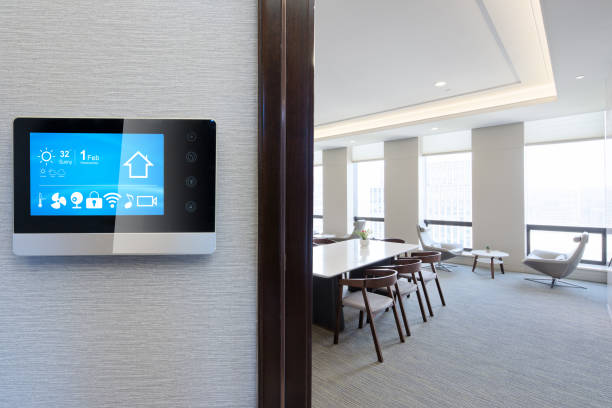
B. Limitations and Selection Considerations of App Control
Lack of convenience: Each control requires unlocking the phone, finding the APP and clicking the operation, which is less efficient than voice.
Network dependency: Most APP controls require a stable Wi-Fi network connection to take effect.
Best choice for users who pursue lighting details, professional functions, system maintenance , and are willing to invest time in customized settings.
How to choose the smart lighting control system that best suits you?
true whole-house smart lighting system must be an integration of voice, APP and physical switches (such as smart switches or wireless switches) .
A. Eco-compatibility first (the cornerstone of your choice)
| ecosystem | Core Advantages | Recommended users |
| Apple HomeKit | It places great emphasis on privacy, has strict device access review, and provides a good Siri voice control experience. | iPhone/Mac/HomePod users focus on system integration and privacy security. |
| Google Home | The most compatible and powerful Google Assistant voice, suitable for the Android ecosystem. | Android users seek the convenience of cross-brand and voice control. |
| Amazon Alexa | Smart speakers have a high market share, rich skills, and are suitable as the voice control center for the whole house. | Echo users who value voice control and automation skills. |
| Matter Protocol | Future trends: Ensuring devices work seamlessly across different ecosystems. | all users when purchasing new smart lighting equipment. |
B. Trade-offs and Integration Strategies
Daily control (immediacy): Voice control + physical switch (such as wireless wall switch) .
Advanced customization (in-depth): unified central control app (such as HomeKit or Google Home) + device brand app (for firmware updates).
Investment advice: First determine your voice assistant (ecosystem) , then choose the smart lighting brand with the highest compatibility in that ecosystem (such as Hue, Yeelight, etc.) to ensure that voice and APP can work perfectly together.
Conclusion: Your habits define your light
choosing a smart lighting control system is to understand your living habits and priorities .
If you pursue “invisible” and instant convenience , then a powerful voice hub is your core; if you like customized lighting and are keen on fine functional depth and system settings, then the combination of brand APP and ecological APP is indispensable.
Ultimately, a perfect intelligent lighting control system should allow you to enjoy the comfort and convenience brought by light without noticing, truly achieving “light follows your heart”.
In your daily life, which do you think is more convenient, voice control or app control? Do you prefer a single-brand smart lighting system or a multi-brand integrated one?
https://www.aconfront.com/ultimate-guide-to-smart-lighting-control-switches-dimmers-sensors-and-voice-app-integration/